Danvers, MA · Essex County
Basement Water Removal in Danvers, MAEmergency Basement Flooding & Basement Water Pump Out
Get basement water removal in Danvers for emergency basement flooding, basement water pump out and basement floor water damage.
Answered 24/7
Basement Water Removal Solutions for Danvers Homeowners
In Danvers, a finished basement or lower level takes more work after a flood. Carpet, pad, laminate, drywall and insulation all trap water against the concrete and framing.
Homeowners in Danvers can call (617) 404-2753 day or night when the basement is taking on water. Service also covers Peabody, Beverly and Salem, with the same pumping and drying steps.
Specialized Basement Water Removal for Danvers
Emergency Basement Flooding
Emergency response starts with making power safe, stopping the source if possible and pumping out the water.
Basement Water Pump Out
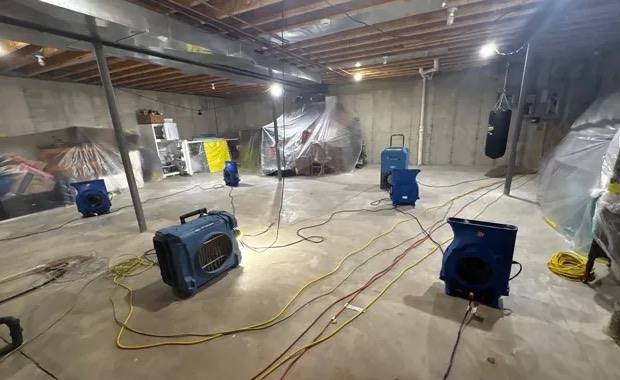
Pumping starts once power to the basement is safe. Deep water goes first, then extractors handle the thin layer left on the floor.
Basement Moisture Inspection
Moisture meters and thermal cameras check walls, floors and the slab for water that is not visible, including behind finished walls.
Sump Pump Failure Water Cleanup
Cleanup after a sump failure includes drying the area around the pit and noting whether the pump, switch or power was the cause.
Basement Floor Water Damage
Water on a basement floor soaks into carpet pad, laminate seams and the concrete itself. Floor coverings are lifted where needed so the slab can dry.
Common Symptoms Requiring Basement Water Removal
Musty Odors and Mold Smell
A musty or damp smell in the basement points to wet materials hidden somewhere in the space.
Rusted Appliances or Furniture
Rust on appliance bases, furniture legs or metal shelving points to standing water or long-term dampness.
Soggy or Wet Carpeting
Carpet that feels damp or smells sour is holding water in the pad against the concrete.
Standing Water in Basement
Standing water anywhere on the basement floor needs to be pumped out before it soaks the walls.
How Basement Water Removal Works in Danvers
Step 1: Emergency Water Extraction
Power is made safe, then pumps and extractors remove standing water from the basement floor.
Step 2: Detailed Moisture Inspection
Meters map wet walls, framing and slab areas, including behind finished walls and under flooring.
Step 3: Drying and Dehumidification
Air movers and large dehumidifiers run continuously, with readings checked every day.
Step 4: Final Verification and Monitoring
Readings are compared to dry areas, and equipment is removed only when the basement tests dry.
Why Basements Flood in Danvers
Sump Pump Malfunction or Power Loss
A sump pump that fails mechanically or loses power during a storm lets groundwater rise.
Heavy Rainfall and Storm Flooding
Heavy rain saturates the soil and pushes water through walls, cracks and the floor joint.
Window Well Leaks and Drainage
Window wells without drains or covers fill with rain and leak through the windows.
Improper Landscape Grading
Soil that slopes toward the house directs rainwater straight to the basement walls.
House and Business Basement Water Removal in Danvers
Residential Basement Water Removal
Families should keep children and pets away from basement water until power is safe and the type of water is known.
Commercial Basement Water Removal
In restaurants and shops, basement water near food or stock storage needs removal and cleaning before those areas are used again.
The Risks of DIY Basement Water Removal
You can move belongings up off the floor and run the dehumidifier you already own. Drying soaked walls and slab needs larger equipment and readings to confirm the job is done.
Factors Affecting Basement Water Removal Cost
In Danvers, the drying phase usually costs more than the pumping, because basements need equipment running for several days.
Contamination Level
Sewage or dirty water needs protective gear, removal and disinfection, which costs more.
Drying Time Required
Basements dry slowly, and each extra day of equipment adds to the total.
Time of Service
Night, weekend and storm calls can cost more than a scheduled weekday visit.
Does Insurance Cover Basement Water Removal?
Photos, moisture readings and drying logs from local basement water removal pros help support an insurance claim for basement water damage in Danvers.
Why Danvers Homeowners Trust Local Pros for Basement Water Removal
Methodical Water Removal Process
Water is removed in a set order: pump-out, extraction, removal of soaked materials, then drying.
Contamination Safety Protocols
Sewage and dirty water are handled with protective gear, containment and disinfection.
Moisture Inspection
Meters and thermal cameras find water in walls, floors and slab that looks dry.
24/7 Basement Water Removal When You Need It
The faster a basement is pumped out, the more can be saved. Call (617) 404-2753 for basement water removal in Danvers as soon as you see water.
Call Now (617) 404-2753Basement Water Removal Near Danvers: Areas Served
Help with basement water removal reaches Peabody, Beverly and Salem, plus other communities around Danvers, for finished and unfinished basements alike.
- Basement Water Removal in Peabody
- Basement Water Removal in Beverly
- Basement Water Removal in Salem
- Basement Water Removal in Marblehead
- Basement Water Removal in Swampscott
- Basement Water Removal in Lynn
- Basement Water Removal in Wakefield
- Basement Water Removal in Saugus
- Emergency Damage Restoration in 01923
- Storm Damage Restoration in 01923
- Water Damage Restoration in 01923
- Water Extraction Service in 01923
- Water Leak Detection in 01923
- Water Removal Service in 01923
Common Basement Water Removal Questions Answered
Is a sump pump failure an emergency?
Yes, especially during rain. Groundwater can rise quickly once the pump stops, flooding the floor and finished rooms.
What causes basement floor water damage?
Storm seepage, burst pipes, appliance leaks, foundation cracks and sewer backups through floor drains are the usual sources.
How long does basement drying take?
Often several days or longer, because concrete and cool basement air hold moisture. Daily readings show when it is done.
Can wet drywall in a basement be saved?
Sometimes, if the water was clean and removed quickly. Soaked or contaminated drywall is cut out above the water line.
What is the difference between a pump out and extraction?
A pump out removes deep standing water. Extraction pulls the remaining water from carpet, pad and floors.