Foxborough, MA · Norfolk County
Basement Water Removal in Foxborough, MASump Pump Failure Water Cleanup & Basement Wall Drying
Basement Water Removal in Foxborough includes basement water pump out, basement drying services and basement moisture inspection.
Answered 24/7
Local Basement Water Removal Services for Foxborough
In Foxborough, a burst pipe or heavy rain can let water rise fast in a basement. The water usually spreads from the low point across the whole floor and into finished rooms.
Homes in Foxborough and nearby Mansfield, Wrentham and Sharon with basements face storm seepage, sewer backups and plumbing leaks. Help with basement water removal covers pump-out, wall and floor drying and dehumidification.
The Basement Water Removal Process in Foxborough
Sump Pump Failure Water Cleanup
A backup pump or battery system is worth discussing with a plumber after the cleanup, since sump failures often repeat in storms.
Basement Wall Drying
Opening the bottom of finished walls lets air reach the studs and sill plate, which otherwise stay wet behind the drywall.
Basement Water Pump Out
A pump-out removes standing water from the basement with submersible pumps, discharging it outside and away from the foundation.
Emergency Basement Flooding
A flooded basement threatens the furnace, water heater and anything stored on the floor. Fast pumping protects what can still be saved.
Basement Floor Water Damage
Concrete floors are squeegeed, extracted and dried with airflow and dehumidifiers until moisture readings drop.
Common Symptoms Requiring Basement Water Removal
Warped or Buckling Flooring
Flooring that buckles, lifts or feels spongy has water trapped between it and the slab.
Sump Pump Failure or Overflow
A sump pit that is full, overflowing or has a pump that will not start means water is about to spread.
Musty Odors and Mold Smell
A musty or damp smell in the basement points to wet materials hidden somewhere in the space.
Soggy or Wet Carpeting
Carpet that feels damp or smells sour is holding water in the pad against the concrete.
How Basement Water Removal Works in Foxborough
Step 1: Source Control and Water Pump Out
The leak is shut off and standing water is pumped out, starting at the lowest point.
Step 2: Water Extraction
Extractors pull water from carpet, pad and concrete, and wet vacs clear corners and stairs.
Step 3: Dehumidification and Drying
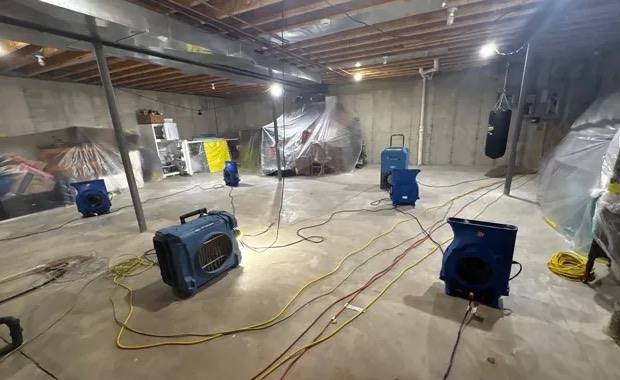
Large dehumidifiers and air movers dry walls, framing and slab over several days.
Step 4: Inspection and Clearance for Repair
Final readings confirm the basement is dry and ready for drywall and flooring repairs.
Why Basements Flood in Foxborough
Foundation Cracks and Seepage
Cracks in foundation walls and the slab let groundwater seep in during wet weather.
Sump Pump Malfunction or Power Loss
A sump pump that fails mechanically or loses power during a storm lets groundwater rise.
Window Well Leaks and Drainage
Window wells without drains or covers fill with rain and leak through the windows.
Appliance Malfunctions and Overflows
Washers, utility sinks and water softeners in the basement can overflow or leak.
House and Business Basement Water Removal in Foxborough
Residential Basement Water Removal
Finished basements used as bedrooms or family rooms need careful moisture checks behind walls and under flooring, since that is where water hides.
Commercial Basement Water Removal
Businesses with below-grade storage need wet inventory moved out and documented. Drying is planned around daily operations wherever possible.
When to Hire Local Pros for Basement Water Removal
Fans by themselves can spread damp basement air through the rest of the house. Basement drying needs dehumidifiers that pull moisture out of both the air and the concrete.
What Influences the Price of Basement Water Removal
A basement pumped out the same day in Foxborough usually needs less drywall and flooring replaced than one left wet for days.
Drying Time Required
Basements dry slowly, and each extra day of equipment adds to the total.
Basement Square Footage
Larger basements need more extraction, more drying equipment and more days of drying.
Affected Materials
Finished walls, carpet and laminate take more removal work than bare concrete.
Does Insurance Cover Basement Water Removal?
Ask your adjuster early how your policy treats seepage and sewer backups, since many policies limit or exclude both kinds of water.
Benefits of Hiring Local Pros for Basement Water Removal in Foxborough
Clear Communication
You get plain updates on what was found, what was removed and how drying is going.
Moisture Inspection
Meters and thermal cameras find water in walls, floors and slab that looks dry.
Post-Service Moisture Verification
Final readings are recorded before equipment leaves, so you know the basement is dry.
Emergency Basement Water Removal Available 24/7
If water is near outlets, the furnace or the electrical panel, stay out of it. Call (617) 404-2753 for help in Foxborough and wait for power to be made safe.
Call Now (617) 404-2753Basement Water Removal Near Foxborough: Areas Served
Basement water removal also covers homes and buildings in Mansfield, Wrentham and Sharon, close to Foxborough, day or night.
- Basement Water Removal in Mansfield
- Basement Water Removal in Wrentham
- Basement Water Removal in Sharon
- Basement Water Removal in Walpole
- Basement Water Removal in Easton
- Basement Water Removal in Norton
- Basement Water Removal in Stoughton
- Basement Water Removal in Franklin
- Emergency Damage Restoration in 02035
- Storm Damage Restoration in 02035
- Water Damage Restoration in 02035
- Water Extraction Service in 02035
- Water Leak Detection in 02035
- Water Removal Service in 02035
Frequently Asked Basement Water Removal Questions
What should I do right after basement flooding?
Make power safe, avoid sewage, move belongings above the water, take photos and call for water removal.
How is basement wall drying done?
Wet drywall is cut back, insulation removed and directed airflow and dehumidifiers dry the studs and masonry.
What happens during basement moisture control?
Dehumidifiers and air movers keep humidity low while materials dry, and readings confirm when the space is normal.
What equipment is used for basement water extraction?
Submersible pumps, extractors, wet vacs, air movers, large dehumidifiers and moisture meters to confirm drying.
How does a basement moisture inspection work?
Moisture meters and thermal cameras check walls, floors and the slab, including behind finished walls and under flooring.