Reading, MA · Middlesex County
Basement Water Removal in Reading, MABasement Wall Drying & Basement Floor Water Damage
Basement Water Removal in Reading covers basement water pump out, basement wall drying and basement dehumidification after a flood.
Answered 24/7
Basement Water Removal Solutions for Reading Homeowners
A basement that looks dry a day after a flood in Reading can still hold a lot of water in the slab, the bottom of the walls and under flooring. That hidden water causes the musty smell many basements have.
A finished basement or lower level in Reading or Wakefield, Stoneham and Woburn can hide water under flooring and behind drywall. The pros find and remove it before it causes lasting damage.
Professional Basement Water Removal Offerings
Basement Wall Drying
Opening the bottom of finished walls lets air reach the studs and sill plate, which otherwise stay wet behind the drywall.
Basement Floor Water Damage
Concrete floors are squeegeed, extracted and dried with airflow and dehumidifiers until moisture readings drop.
Emergency Basement Flooding
Emergency response starts with making power safe, stopping the source if possible and pumping out the water.
Basement Drying Services
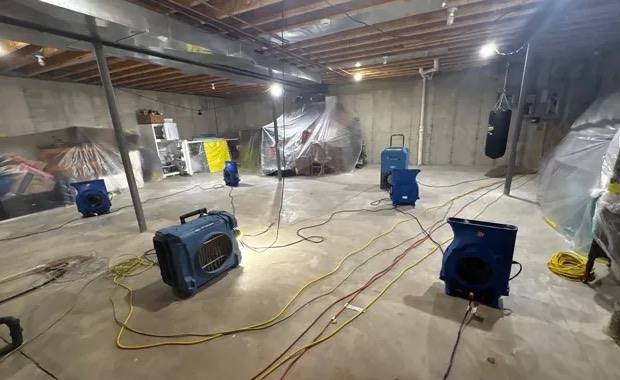
Equipment stays until the basement reads dry, not just until it looks dry. Removing it early lets dampness return.
Basement Moisture Inspection
Readings are recorded at each visit, giving you and your insurer a clear record of the drying.
When to Call for Basement Water Removal in Reading
Efflorescence on Concrete Walls
White, powdery deposits on concrete walls mean water is passing through the masonry.
Warped or Buckling Flooring
Flooring that buckles, lifts or feels spongy has water trapped between it and the slab.
High Humidity and Condensation
Water on pipes and windows, or a constantly clammy feel, means basement humidity is too high.
Musty Odors and Mold Smell
A musty or damp smell in the basement points to wet materials hidden somewhere in the space.
How Basement Water Removal Works in Reading
Step 1: First Call and Initial Assessment
The source, the type of water and the depth are checked, and the water level is photographed.
Step 2: Bulk Water and Contaminant Removal
Pumps remove standing water, and carpet, pad or drywall touched by dirty water is removed.
Step 3: Drying With Monitoring
Dehumidifiers and air movers run around the clock, with readings logged every day on walls and slab.
Step 4: Post-Drying Evaluation and Documentation
Final readings and photos are compiled to show the basement is dry and what was removed.
Sources of Basement Water Problems
Appliance Malfunctions and Overflows
Washers, utility sinks and water softeners in the basement can overflow or leak.
Foundation Cracks and Seepage
Cracks in foundation walls and the slab let groundwater seep in during wet weather.
Sewer Line Backups and Blockages
A blocked sewer line can push wastewater up through basement floor drains and toilets.
High Water Table and Hydrostatic Pressure
A high water table presses groundwater against the slab and walls, forcing it inside.
Basement Water Removal for Homes and Businesses
Residential Basement Water Removal
Families should keep children and pets away from basement water until power is safe and the type of water is known.
Commercial Basement Water Removal
In restaurants and shops, basement water near food or stock storage needs removal and cleaning before those areas are used again.
When to Hire Local Pros for Basement Water Removal
Checking appliance hoses and extending downspouts away from the house are good DIY steps before storm season. Once the basement floods, call (617) 404-2753 for help.
Factors Affecting Basement Water Removal Cost
Sewage cleanup, finished walls, after-hours calls and damaged appliances all add to the total for basement water removal in Reading.
Access and Complexity
Narrow stairs, low ceilings and crowded storage areas make the work slower and longer.
Drying Time Required
Basements dry slowly, and each extra day of equipment adds to the total.
Basement Square Footage
Larger basements need more extraction, more drying equipment and more days of drying.
Does Insurance Cover Basement Water Removal?
Photos, moisture readings and drying logs from local basement drying experts help support an insurance claim for basement water damage in Reading.
The Value of Professional Basement Water Removal
Focus on Drying Outcomes
Drying continues until readings are normal, not just until surfaces look dry.
Methodical Water Removal Process
Water is removed in a set order: pump-out, extraction, removal of soaked materials, then drying.
Clear Communication
You get plain updates on what was found, what was removed and how drying is going.
24/7 Basement Water Removal When You Need It
Standing water in a basement soaks walls and floors by the hour. Call (617) 404-2753 for basement water removal in Reading at any time, day or night.
Call Now (617) 404-2753Basement Water Removal Near Reading: Areas Served
Help with basement water removal is also available in communities near Reading, including Wakefield, Stoneham and Woburn, for flooded basements and sewer backups.
- Basement Water Removal in Wakefield
- Basement Water Removal in Stoneham
- Basement Water Removal in Woburn
- Basement Water Removal in Burlington
- Basement Water Removal in Melrose
- Basement Water Removal in Winchester
- Basement Water Removal in Saugus
- Basement Water Removal in Malden
- Emergency Damage Restoration in 01864
- Storm Damage Restoration in 01864
- Water Damage Restoration in 01864
- Water Extraction Service in 01864
- Water Leak Detection in 01864
- Water Removal Service in 01864
- Emergency Damage Restoration in 01867
- Storm Damage Restoration in 01867
Basement Water Removal FAQs
What equipment is used for basement water extraction?
Submersible pumps, extractors, wet vacs, air movers, large dehumidifiers and moisture meters to confirm drying.
Why is fast water removal so important for basements?
Basements dry slowly, so every hour of standing water adds drying days and more materials to replace.
Why is basement dehumidification important after pumping?
Walls and concrete keep releasing moisture for days. Dehumidifiers remove it so the basement does not stay damp.
Can I dry my basement myself with fans?
Fans help with surface water, but walls and concrete need dehumidifiers and readings to dry fully.
Does basement flood cleanup include mold prevention?
Fast drying is the main prevention. Wood and concrete that stayed wet can be treated with an antimicrobial once dry.