Weymouth, MA · Norfolk County
Basement Water Removal in Weymouth, MABasement Water Pump Out & Basement Drying Services
After a burst pipe or storm, Basement Water Removal in Weymouth means basement water pump out, basement wall drying and basement drying services.
Answered 24/7
Expert Basement Water Removal in Weymouth, Hingham, Braintree and Quincy
In Weymouth, a finished basement or lower level takes more work after a flood. Carpet, pad, laminate, drywall and insulation all trap water against the concrete and framing.
Homeowners in Weymouth can call (617) 404-2753 day or night when the basement is taking on water. Service also covers Hingham, Braintree and Quincy, with the same pumping and drying steps.
Comprehensive Basement Water Removal Solutions
Basement Water Pump Out
A pump-out removes standing water from the basement with submersible pumps, discharging it outside and away from the foundation.
Basement Drying Services
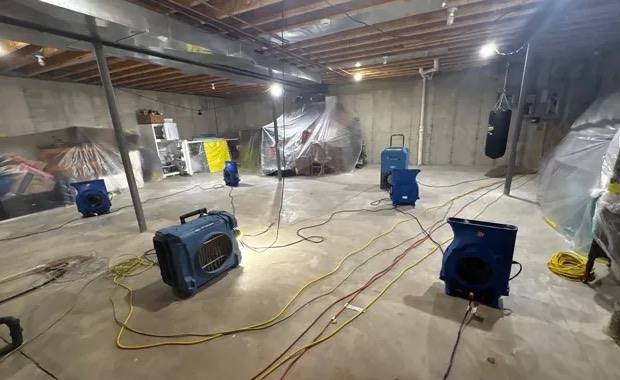
After pumping, air movers and dehumidifiers dry the walls, framing and slab. Readings are taken daily until every surface is back to normal.
Basement Floor Water Damage
Water on a basement floor soaks into carpet pad, laminate seams and the concrete itself. Floor coverings are lifted where needed so the slab can dry.
Basement Wall Drying
Basement walls are checked with moisture meters. Wet drywall is cut back above the water line, and insulation behind it is removed.
Emergency Basement Flooding
Emergency response starts with making power safe, stopping the source if possible and pumping out the water.
Signs of Basement Water Damage in Weymouth
Musty Odors and Mold Smell
A musty or damp smell in the basement points to wet materials hidden somewhere in the space.
Efflorescence on Concrete Walls
White, powdery deposits on concrete walls mean water is passing through the masonry.
Gurgling Sounds From Drains
Gurgling floor drains or slow drains can be an early sign of a sewer line problem.
Soggy or Wet Carpeting
Carpet that feels damp or smells sour is holding water in the pad against the concrete.
How Basement Water Removal Works in Weymouth
Step 1: Safety Assessment and Pump Out
Electrical hazards are checked, then deep water is pumped outside away from the foundation.
Step 2: Content Removal and Damage Documentation
Wet belongings are moved, and photos record the water level and damaged materials.
Step 3: Targeted Water Removal and Drying
Carpet is extracted, wet drywall is cut back and air is aimed at walls and the slab.
Step 4: Sanitization and Moisture Control
Surfaces touched by dirty water are disinfected, and dehumidifiers keep humidity low.
Common Causes of Basement Flooding in Weymouth
Appliance Malfunctions and Overflows
Washers, utility sinks and water softeners in the basement can overflow or leak.
Sewer Line Backups and Blockages
A blocked sewer line can push wastewater up through basement floor drains and toilets.
Improper Landscape Grading
Soil that slopes toward the house directs rainwater straight to the basement walls.
Heavy Rainfall and Storm Flooding
Heavy rain saturates the soil and pushes water through walls, cracks and the floor joint.
Basement Water Removal for Homes and Businesses
Residential Basement Water Removal
In homes, a wet basement often means damaged carpet, drywall and stored belongings, plus a furnace or water heater sitting in water. Water is pumped out and the space dried.
Commercial Basement Water Removal
In commercial buildings, basements often house mechanical rooms and storage. Water is removed so systems can be checked to determine whether they can be restarted safely.
The Risks of DIY Basement Water Removal
Do not step into basement water if cords, outlets or appliances are in it. Shut off power at the panel only if you can reach it from a dry spot, then call (617) 404-2753.
Basement Water Removal Cost in Weymouth, MA
Sewage cleanup, finished walls, after-hours calls and damaged appliances all add to the total for basement water removal in Weymouth.
Contamination Level
Sewage or dirty water needs protective gear, removal and disinfection, which costs more.
Water Depth and Volume
Deeper water takes more pumping time and usually means more materials got wet.
Basement Square Footage
Larger basements need more extraction, more drying equipment and more days of drying.
Does Insurance Cover Basement Water Removal?
Flooding from outside water usually needs separate flood insurance. Water from a broken pipe or appliance inside is more often covered.
The Value of Professional Basement Water Removal
Clear Communication
You get plain updates on what was found, what was removed and how drying is going.
Advanced Drying Equipment
Pumps, extractors and large dehumidifiers remove water much faster than household tools.
Post-Service Moisture Verification
Final readings are recorded before equipment leaves, so you know the basement is dry.
24/7 Emergency Basement Water Removal in Weymouth
If water is near outlets, the furnace or the electrical panel, stay out of it. Call (617) 404-2753 for help in Weymouth and wait for power to be made safe.
Call Now (617) 404-2753Communities Served for Basement Water Removal
Besides Weymouth, local basement water removal pros handle basement pump-outs, wall drying and dehumidification in nearby Hingham, Braintree and Quincy.
- Basement Water Removal in Hingham
- Basement Water Removal in Braintree
- Basement Water Removal in Quincy
- Basement Water Removal in Holbrook
- Basement Water Removal in Hull
- Basement Water Removal in Randolph
- Basement Water Removal in Rockland
- Basement Water Removal in Abington
- Emergency Damage Restoration in 02188
- Storm Damage Restoration in 02188
- Water Damage Restoration in 02188
- Water Extraction Service in 02188
- Water Leak Detection in 02188
- Water Removal Service in 02188
- Emergency Damage Restoration in 02189
- Storm Damage Restoration in 02189
Basement Water Removal in Weymouth: Your Questions
How does a basement moisture inspection work?
Moisture meters and thermal cameras check walls, floors and the slab, including behind finished walls and under flooring.
What is emergency basement flooding response?
Help any hour to make power safe, stop the source, pump out water and start drying before more damage sets in.
How is contaminated water handled in a basement?
With protective gear, containment, removal of porous materials and disinfection of hard surfaces before drying.
What happens during basement moisture control?
Dehumidifiers and air movers keep humidity low while materials dry, and readings confirm when the space is normal.
What equipment is used for basement water extraction?
Submersible pumps, extractors, wet vacs, air movers, large dehumidifiers and moisture meters to confirm drying.